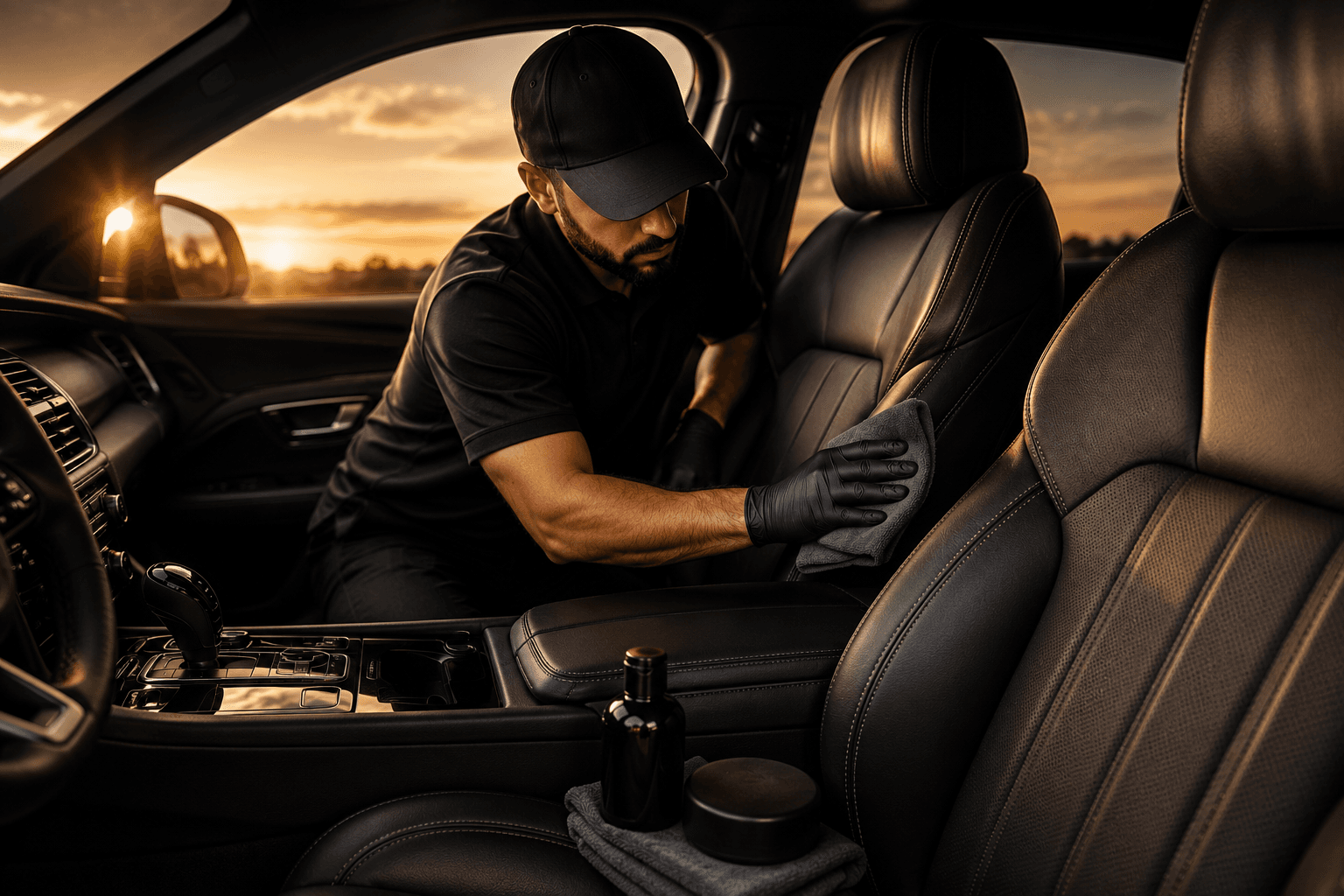
The honest answer is: more often than you currently are. But the right frequency isn't a single number — it depends entirely on how you actually use your vehicle and what lives in it day to day.
The Baseline Rule
For the average driver, a full professional interior detail every three months is the minimum necessary to prevent permanent damage. Not because the car looks dirty after three months, but because that's the window before allergen buildup, leather dehydration, and minor stains begin to set in ways that become progressively harder to reverse.
Between professional details, a light maintenance routine — quick vacuum, surface wipe, window cleaning — every two to three weeks keeps the baseline manageable and extends the time between full details.
Adjust for Your Lifestyle
If you have children or pets in the car regularly, increase frequency to every six to eight weeks. If you eat in your car, commute long distances daily, or work out of your vehicle, apply the same increase. Long hours in an enclosed space amplify the concentration of bacteria and allergens faster than occasional use would suggest.
Leather needs conditioning every 2–3 months to prevent irreversible cracking — not when it already looks dry. Conditioning restores; it cannot reverse damage that's already done.
After Winter: Non-Negotiable
A post-winter deep clean isn't optional — it's maintenance. For drivers across the GTA and Niagara region, road salt and de-icing chemicals tracked in on boots and floor mats are corrosive. Moisture trapped in carpet padding from wet winter boots creates a prime mold environment. Slush that dries in seat seams leaves salt deposits that degrade fabric over time. The longer you wait after winter, the more damage accumulates unchecked.
Leather Needs Its Own Schedule
Leather upholstery operates on a different maintenance cycle than fabric. It needs conditioning every two to three months to maintain moisture balance and prevent cracking. It needs UV protectant applied before summer. And it requires a pH-balanced cleaner — not household products, which strip the oils that keep it supple.
Most owners condition leather only when it looks visibly dry. By that point, micro-cracks have already formed. Conditioning restores moisture, but it can't fill cracks that have already opened.
Five Signs You Need One Now
If any of the following apply, you shouldn't wait for the calendar: visible stains on fabric or carpet, a musty or persistent odor, foggy windows from interior moisture buildup, sticky or tacky surfaces from residue accumulation, or embedded crumbs and debris in seat seams and door pockets.
Each of these is a symptom of a problem that's already progressing. Address it before it becomes permanent. Don't wait for the smell. Establish a schedule and stick to it.