Your Car's Interior Is Dirtier Than You Think
Health

YourCar'sInteriorIsDirtierThanYouThink

Home Run Car Detailing Team4 min readHealth

Studies have found that the average car interior harbors more bacteria per square centimeter than a public toilet seat. Most drivers vacuum once a year, if that, and consider the job done. The truth is considerably more unsettling.

What's Actually Growing in There

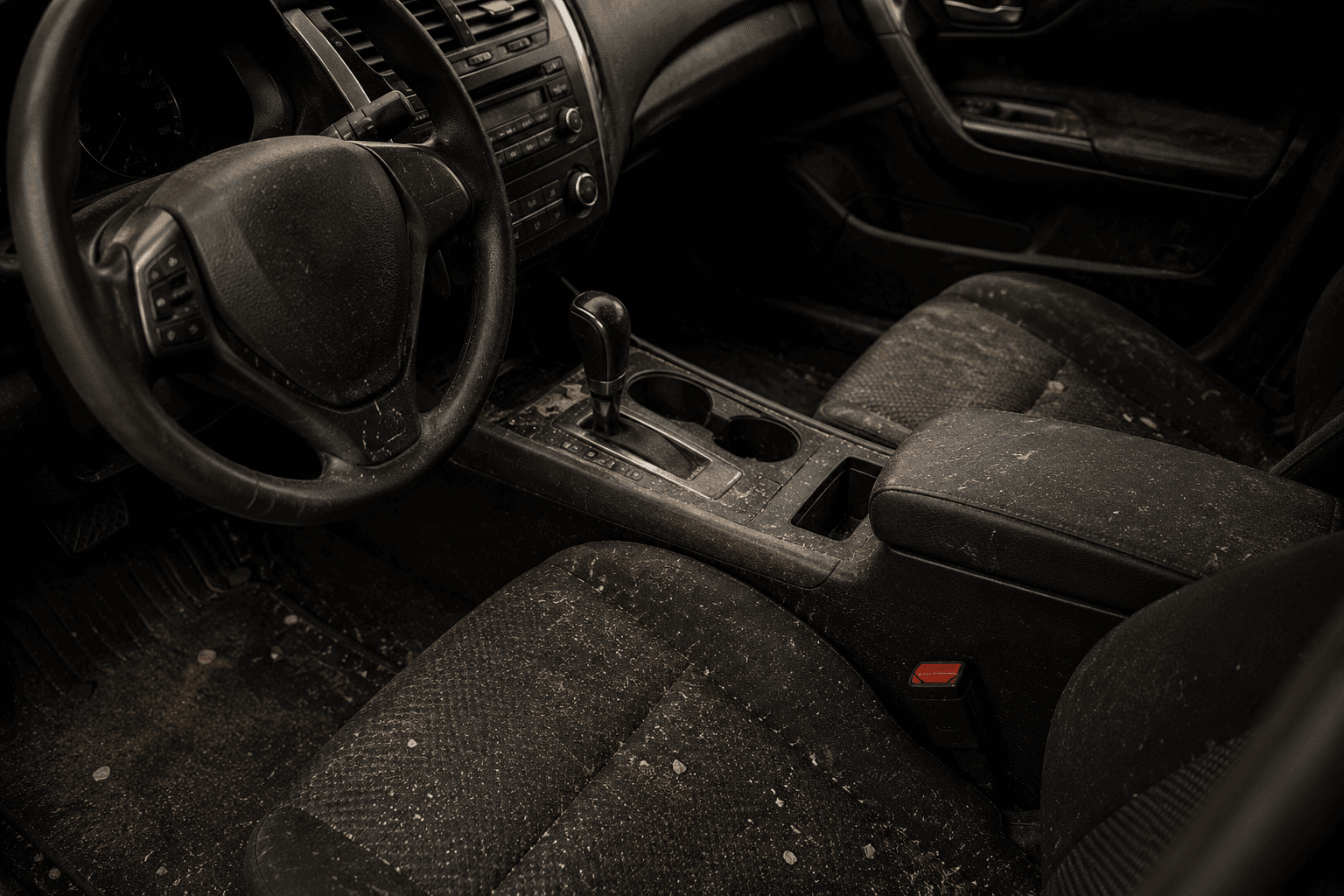
Every time you close the car door, you trap a microenvironment. The warmth, the occasional spilled coffee, the crumbs from last Tuesday's commute — these create the perfect breeding ground for bacteria, mold, and allergens. Steering wheels have been found to carry four times more germs than a public bathroom door handle. Cup holders test even worse.

Dust mites, pollen, and pet dander embed deep into carpet fibers and seat seams — places a household vacuum simply can't reach. Once embedded, they become airborne every time you sit down, start the fan, or adjust the vents.

The Air Quality Problem

The EPA has confirmed that indoor air quality can be two to five times worse than outdoor air. Your car is one of the most confined indoor spaces you regularly occupy, and most cabin air filters are changed far less often than recommended — roughly every 12,000 to 15,000 miles.

When your interior is dirty, the filter is fighting a losing battle. Dust, spores, and allergens continuously re-enter the air supply from surfaces the filter never touches: the headliner, seat cushions, floor mats. Poor air quality doesn't always manifest as sneezing. More often, it shows up as reduced focus or that persistent low-grade fatigue that makes every commute feel longer than it is.

Indoor air quality can be two to five times worse than outdoor air — and your car is one of the most confined spaces you occupy every single day.

Ready to see the difference? Book a mobile detail in your area →

Ready?

See the Difference Yourself.

Mobile detailing that comes to you. Professional equipment, no waiting room.

UV Rays Make It Worse

Sunlight streaming through your windows doesn't clean your interior — it bakes contaminants deeper into the material. UV rays break down organic matter, producing odors and accelerating the degradation of bacteria into harder-to-remove compounds. The result: that "old car smell" that intensifies every summer, no matter how much air freshener you use.

Steam Cleaning vs. Vacuuming

A standard vacuum removes surface debris. It doesn't sanitize. It doesn't extract bacteria embedded in carpet padding. It doesn't clean air vents — statistically among the dirtiest surfaces in any vehicle.

Professional interior detailing uses steam cleaning at temperatures above 120°C — hot enough to kill bacteria, mold spores, and dust mites on contact. A carpet extractor pulls embedded material from deep in the padding. Vent brushes reach places no vacuum attachment can. The result isn't just a cleaner-looking interior. It's measurably cleaner air.

Steam penetrates porous surfaces: fabric, carpet, foam padding. The high temperature kills microorganisms without chemical residue, making it safe for children, pets, and allergy sufferers. Vacuuming, by comparison, agitates allergens as much as it removes them.

Most drivers wait until they notice an odor before considering a professional detail. By that point, bacteria colonies are well established, stains have set permanently, and the odor is embedded in the headliner foam — the hardest surface in any car to deodorize. Don't wait for the smell. Your car is dirtier than it looks. Book a mobile detail in your area and get ahead of it.

Book Now

Your Car Deserves Better.

Professional mobile detailing delivered to your door. Flexible scheduling — evenings and weekends.